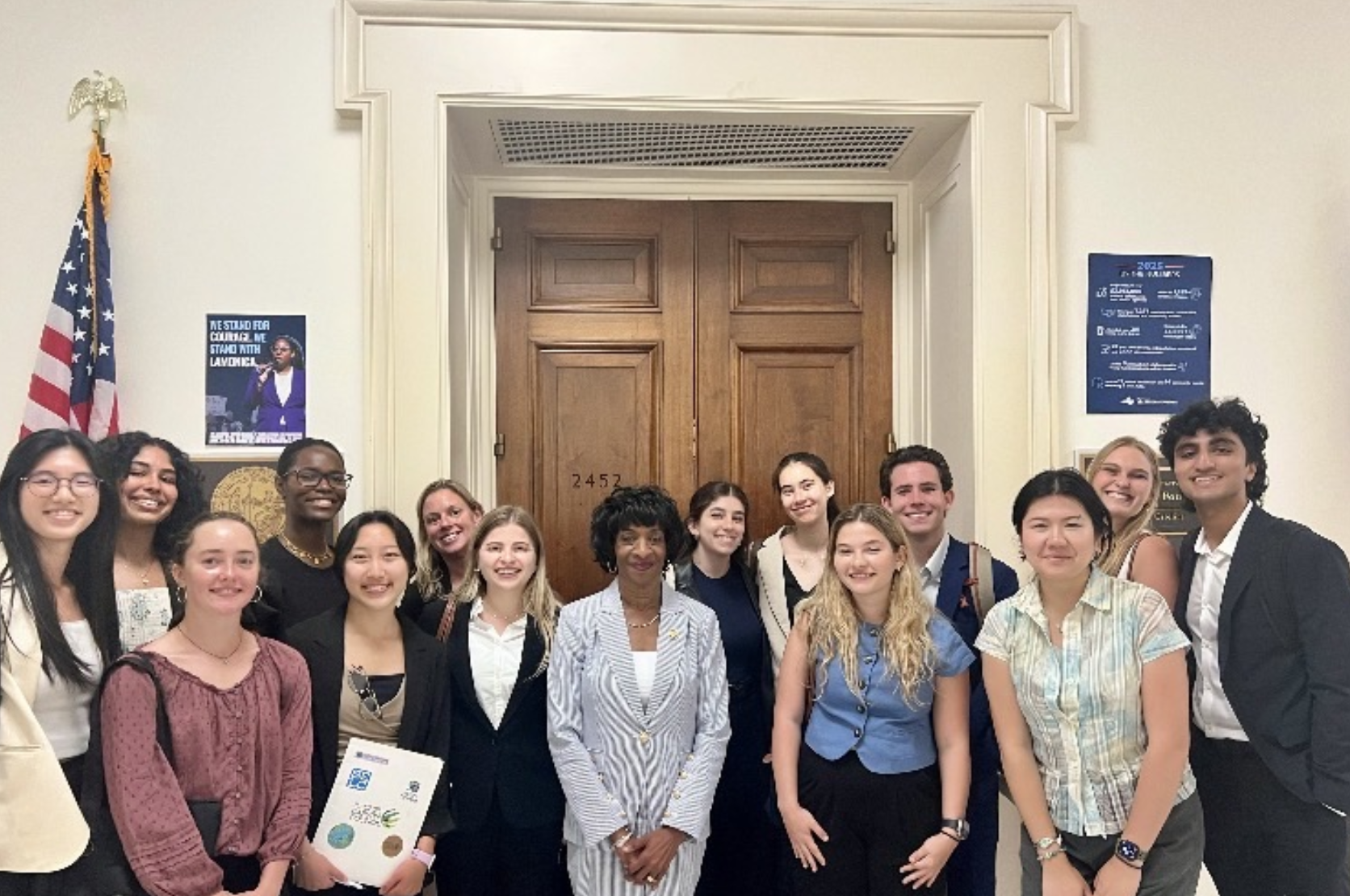
This summer, I worked at the Rachel Carson Council as part of Duke University’s Stanback Fellowship Program. The Rachel Carson Council conducts advocacy and education work across a variety of focus areas, including conservation, environmental health, voter education, and climate activism.
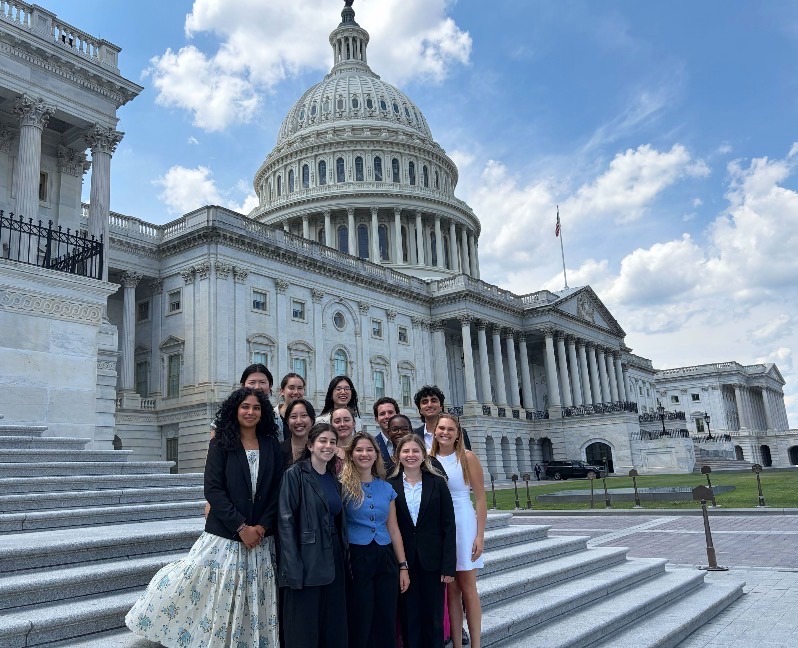
My summer fellowship not only taught me how to research policy and create compelling deliverables, but also gave me perspective on how to effectively use my voice to spark change in a convoluted political system. I created fact sheets on policy topics such as boreal forest conservation and fossil fuel subsidies, and wrote photo essays exploring environmental advocacy from a narrative lens. As part of RCC’s “Hill Week”, we had the opportunity to visit Congress and hold meetings with legislative staffers in multiple offices to outline a core issue and deliver my ask. As someone interested in energy policy, I explored the topic of enhanced geothermal power, and chose to advocate for the passage of the Geo POWER Act, which seeks to provide a financing program for next-generation geothermal projects.
Prepping For Hill Week
In the weeks leading up to Hill Week, the staff at RCC gave us primer presentations on policy, coalition building, and effective advocacy. We covered things like the many stages bills go through to become laws, and the function of committees and which ones were most central to our work. Underpinning all this was an overlying theme: even in this complex and often slow-moving system, any ordinary person can have the power to spark change, if they know how to use their voice.
A way we learned to conceptualize political influence for effective advocacy was through a “power map”, where important players fall on two spectrums: least influential to most influential, and most likely to agree or disagree with your stance. Creating this power map can help inform where and how to direct outreach to build the strongest coalition for your cause.
Highs and Lows
During Hill Week, I met with 6 offices — most of them Democrat and sympathetic to climate causes, but not all. My very first meeting was with a staunchly Republican office from a state with strong historical ties to the fossil fuel industry. I still felt optimistic that some parts of my pitch would compel them — interestingly, it was a state that could serve to benefit from enhanced geothermal infrastructure. Although the staffer took the time to listen to us and was respectful, she explicitly referenced her state’s fossil fuel ties as a reason her Senator was unlikely to take on our causes. To me, this highlighted the intrinsic opposition many offices still feel to anything “clean energy” related, even if some bipartisan progress on geothermal is still being made.
I also met with a number of absolutely wonderful staffers who not only took the time to listen and take notes on each of our asks, but also prompted dialogues with us on the real current state of environmental policy action in Washington. One point that was brought up over and over again was the fact that any bill that is not bipartisan-sponsored is extremely unlikely to move forward in Congress. In a time with such stark division in our country, a bill seeking to create real change that is supported by both sides of the aisle is unfortunately difficult to come across.
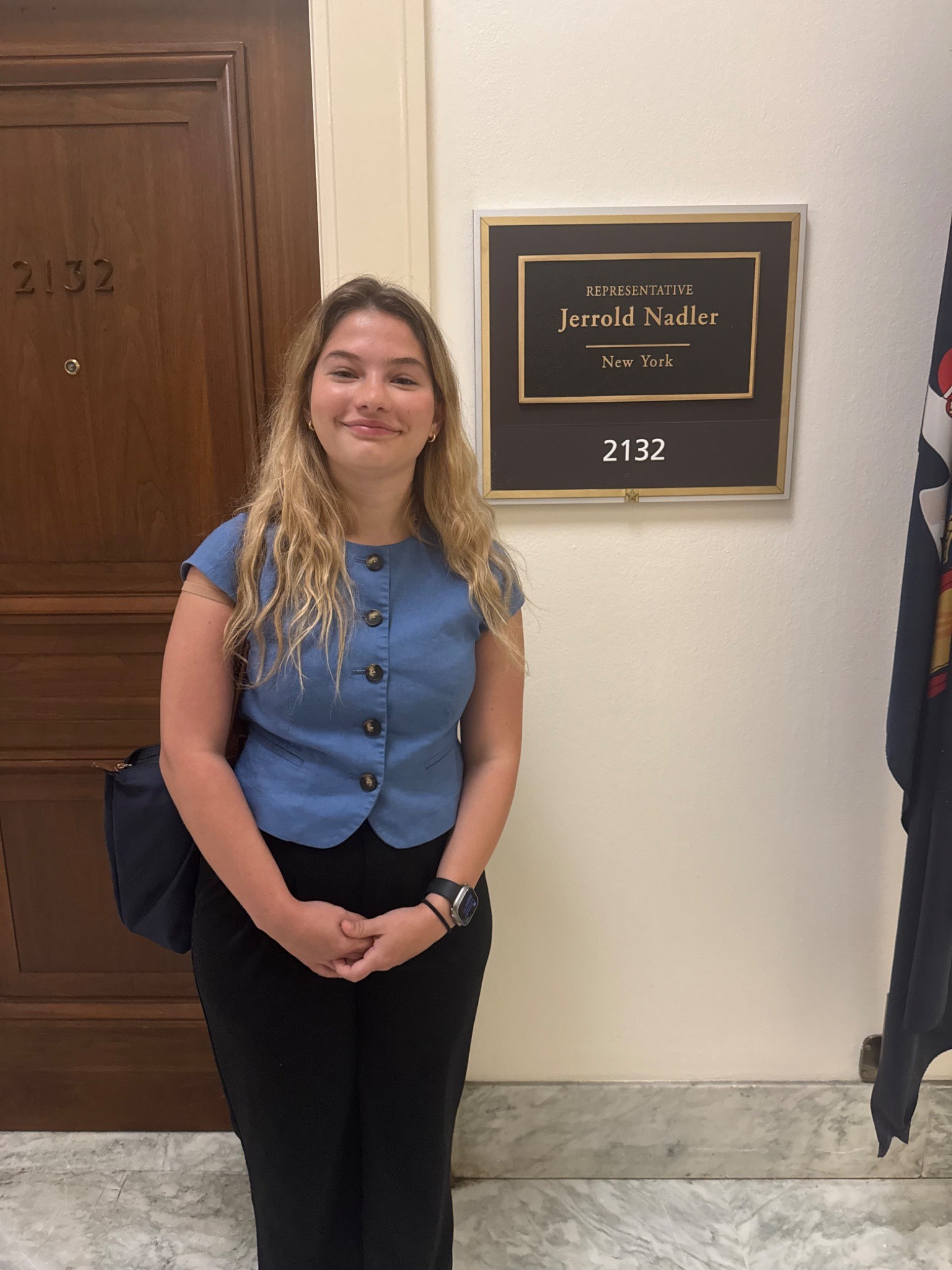
I not only learnt new things from the staffers, but from the other fellows in my cohort. Often, there would be several of us sitting in on a meeting, and by the end of the week, I could probably replicate my friends' pitches on carbon pricing, critical mineral onshoring, and Solar for All. Although I didn’t research these topics myself, I became more informed on them by listening to those around me who were passionate about the issue, and had done the research to show it.
Final Reflections
My time with the Rachel Carson Council helped turn “lobbying” from an abstract idea to a tool I felt equipped to use for the causes I’m passionate about. Advocacy and activism is not always about getting the right meetings with the right people and impressing them — it’s about being strategic about your coalition building, and remembering that there is always a way to make your voice heard.





.jpeg)
.avif)