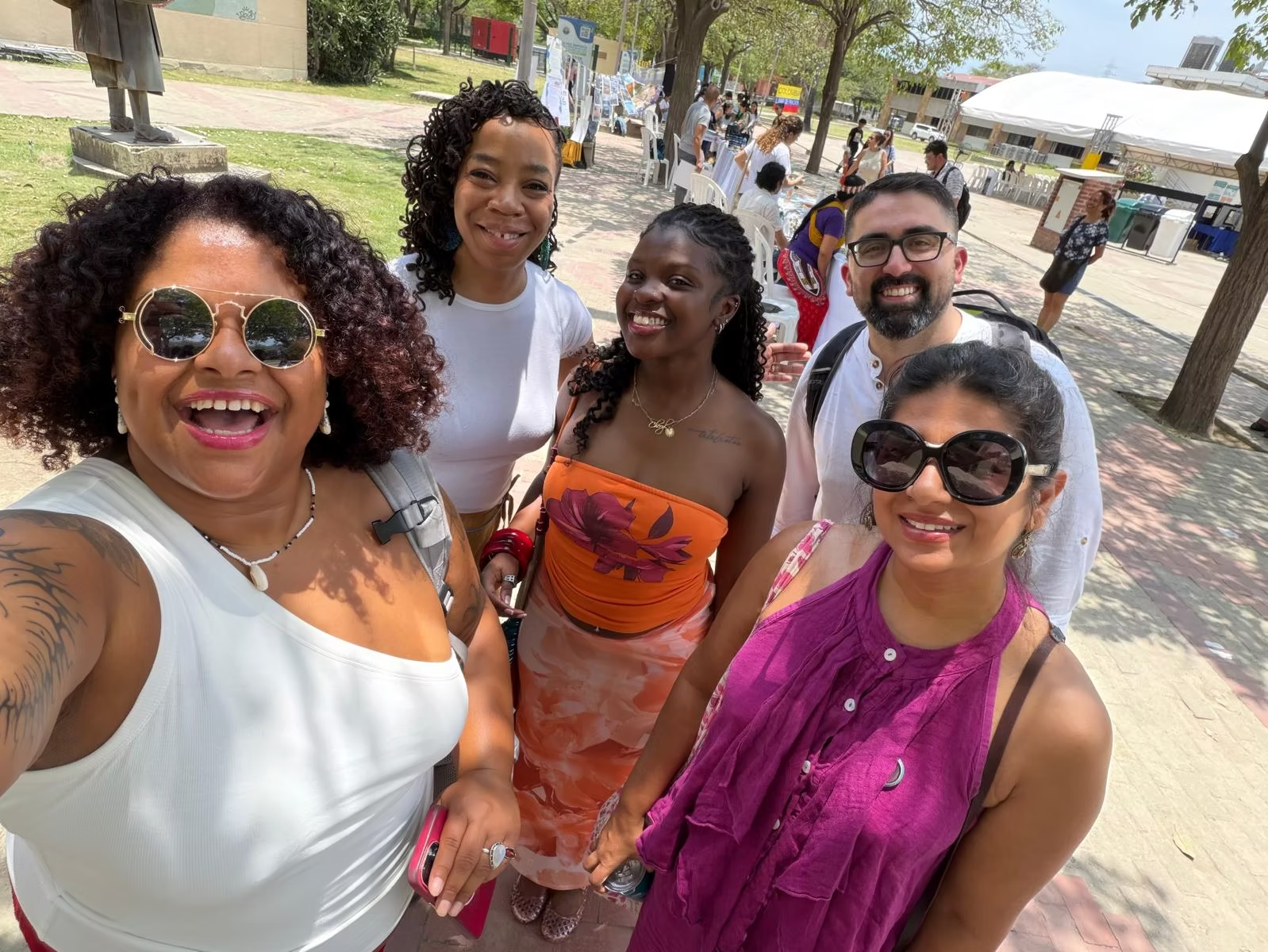
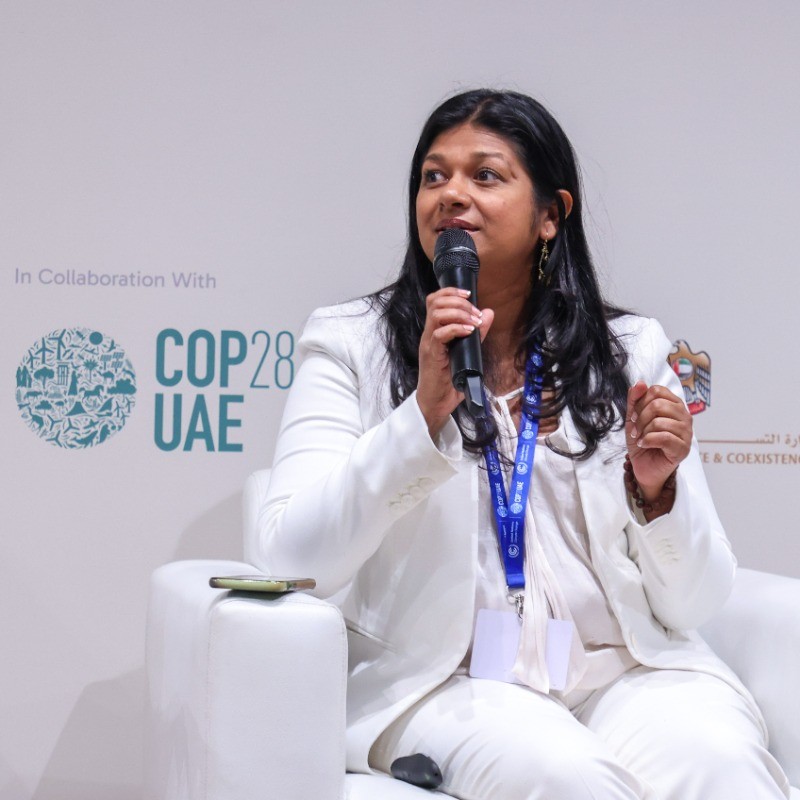
Knellee Bisram is the Co-Chair of the Regenerative Economies & Accountability Action Team for USCAN, Representative to the UN for AHAM Education, and a certified nature-centered Mindfulness teacher.
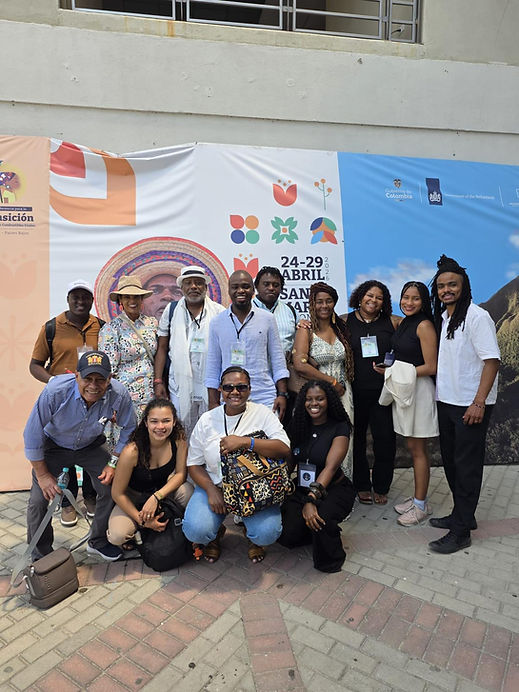
The Transitioning Away from Fossil Fuels (TAFF) Conference in Santa Marta, Colombia last month marked a historic pivot by a coalition of the willing toward a just, clean energy future for all. Led by Colombia and the Netherlands, this process was initiated during COP30 in Belém when member states failed once again to deliver a clear roadmap to a fossil fuel phase-out.
I landed in Santa Marta on April 23, as part of the USCAN delegation. Our goal, along with global climate justice allies: a binding international agreement for a managed phase-out of fossil fuel extraction, production, and trade, supported by financing mechanisms and a clear roadmap for a just transition to diversified clean energy economies. Circumventing the official UN process in the face of deadlock is not new. The Ottawa Treaty in 1979 banning landmines after the UN Conference on Disarmament stalled and the alliance of countries calling for a High Seas Mining Moratorium are two examples of ad hoc diplomacy toward enforceable international agreements.
In the months preceding the conference, I witnessed the chaos, commitment and creativity of civil society engagement by region, sector and affinity groups led by Climate Action Network International, as we did our best to build and navigate a new process. In Santa Marta, in the days leading up to high level talks, several intensive all-day sessions among the various civil society sectors culminated in the People’s Declaration for a Rapid, Equitable, Just Transition for a Fossil Free Future.
While civil society sector representatives were allowed to participate in high level talks, some specific demands were not explicitly included in the final outcome. Yet, the impact of our collective power, momentum and the indelible “firsts” is undeniable in shaping the path to a regenerative future for all.
Shifting Paradigms for Systemic Change
Many of us in Santa Marta shared the view that moving away from fossil fuels alone is not enough. By itself, changing our energy sources does not address the root causes of climate injustice or other urgent ecological threats, including mining, war, militarization, and human rights violations. The question, “What are we transitioning to?” permeated discussions among high-level officials, subnational leaders, academics, and civil society, prompting a clear paradigm shift in the People’s Declaration and in the statements from Indigenous and Afrodescendant groups. This time, it felt as though we had drawn a line in the sand:
We didn’t all get that we wanted, but we set a bar for incremental gains in the future. We left Santa Marta with a sense that there is no turning back now.
Embracing Micro-Multilateralism
I am very proud to host this conference with presence of local and regional governments. Multilateralism has for too long been centered in governments, in nations, leaving behind discussions and articulations that are crucial for implementation because at the end who implements the policies that are taken… are the cities, the regions, the states… This is a new multilateralism, it’s a new attempt to build political power, and is a new way of building implementation particularly in what [relates] to climate action and to energy transition.
— Irene Vélez Torres, Minister of Environment and Sustainable Development of Colombia
Hearing these words in a closed roundtable hosted by the Under 2 Coalition and C40 Cities filled me with hope. Across the table were the California EPA deputy policy director, a sustainability representative from Maui, the Mayor of Santa Marta, and other subnational leaders from France, Quebec City, Argentina, Ireland, and several African states—many committed to a clean energy future even when their national governments had not endorsed the process. As a community representative for Broward County’s climate action plan, I connected with the practical nature of their exchange, which focused on addressing local legislative and administrative challenges in pursuing a net zero agenda across different political contexts.
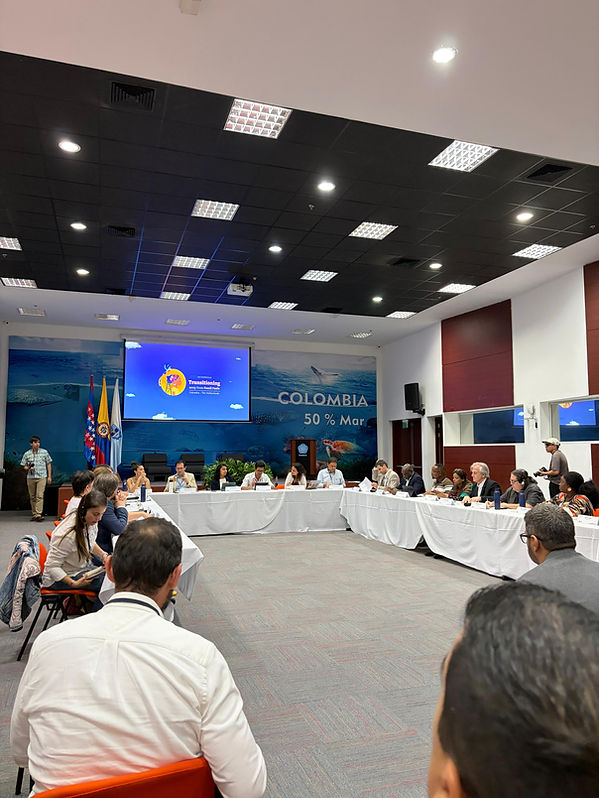
The weakening of the multilateral system is concerning, especially as countries such as the United States opt out of this and other UN processes. Even so, Santa Marta renewed the promise of cross-city, cross-regional, transnational leadership and coalition-building around shared policy goals among subnational actors, working alongside academia, regenerative businesses, and civil society. Local leaders are advancing clean energy laws and regenerative solutions that help their communities thrive despite national inaction. This emerging form of “micro-multilateralism,” as I call it, creates a pathway for local transformation with global impact.
The Inner Work of Just Transition
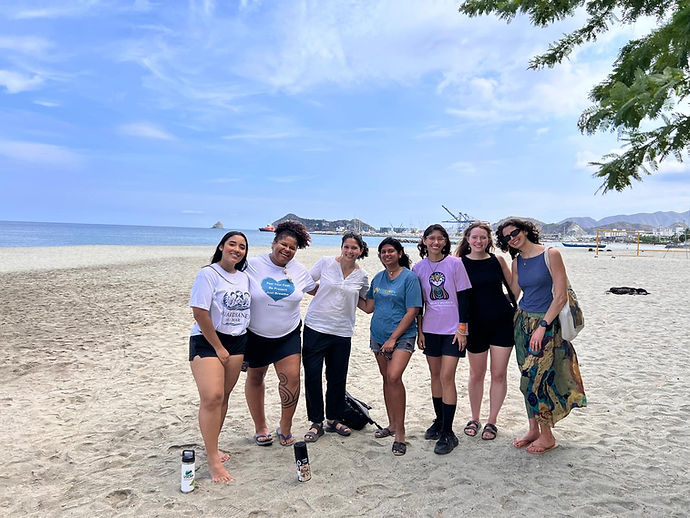
The most meaningful experience for me was the We Are Nature mindful beach cleanup and land-and-water ceremony held before the formal stakeholder dialogues. International NGOs, Indigenous groups, and Santa Marta local authorities gathered on the beach to learn about the city’s history, honor its native people, remove more than 600 gallons of debris, and spend time in community with one another and the land. The event was organized as a Self-Organized Dialogue + Action of the Global Ethical Stocktake (GES), an initiative launched by the Brazilian COP Presidency in collaboration with former Irish President Mary Robinson to bring a values-based approach to climate justice.
As we look ahead to Tuvalu in 2027, we have an opportunity to inquire more deeply how our own structures and processes for co-creating the future we want may reinforce and perpetuate the oppressive patterns of the systems we seek to change.
Are we willing to slow down, reflect, and make real space for brave dialogue—not only about our list of demands, but also about the quality of our relationships with one another and with Nature?
Working to change a system while swimming in it is hard. Invariably, if we don’t check ourselves, we can unintentionally derail our own progress. In Santa Marta, as in many other intense, fast-paced, results-driven advocacy spaces, the invisible moments of aggression and bullying, emotional dysregulation, subtle silencing of feminine voices, information gatekeeping and other maladaptive reactive patterns have become an accepted part of the process. And aren’t these the same harm-producing behaviors that have brought us to this place of disharmony with our ecosystem, that we are now trying to fix? These behaviors aren’t just inconvenient; they bruise relationships within ally groups and create internal clogs in our communication. From a neuroscience perspective, dysregulated brains and nervous systems inhibit responsible decision-making, creative problem solving and collaborative action.
It doesn’t have to be this way; we can choose to be different. We can choose to prioritize our own resilience and emotional intelligence and be accountable for HOW we show up In these spaces. Taking the time to do the inner work of a just transition is not only important but essential to OUR success.
The planet is holding up a mirror, reflecting our inner dysfunction, disconnection, and fear. A clear undercurrent vibrating across the panels, assemblies, and roundtables was that individual and collective trauma healing IS the work of just transition. It was meaningful to encounter several parallel offerings that reconnected us with Nature and our indigeneity, created space for mindfulness and listening circles, and built community through music, art, and even a Caribbean street party. The GES offers a simple but promising framework for intentional, restorative dialogue, artistic expression, and values-based action that can support collective healing while meeting climate outcomes. Bringing self-awareness, co-regulation, care, and reconciliation into formal talks—beyond ceremony and feel-good side events—can help transform us and accelerate progress toward clean energy and regenerative economies.
Finally, as we plan for the Tuvalu conference, let’s strengthen our agency by designing our advocacy interactions not just thematically and logistically, but also energetically, with a sharp focus on our socio-emotional resilience and listening to Nature for guidance. No more talks about Nature without her at the table. My hope is that we lean into this challenge and give ourselves grace when we fall short, understanding that the means of our progress are just as crucial as the outcomes.




.jpeg)