Updated: Dec 8, 2025
This blog post is co-authored with Sriram Madhusoodanan, USCAN Director of Climate Policy & Advocacy.
The UN climate talks in Brazil (COP30) went into overdrive, wrapping up a day late. Even despite the notable and historic absence of the United States, a host of Global North countries attempted to block justice across the board.
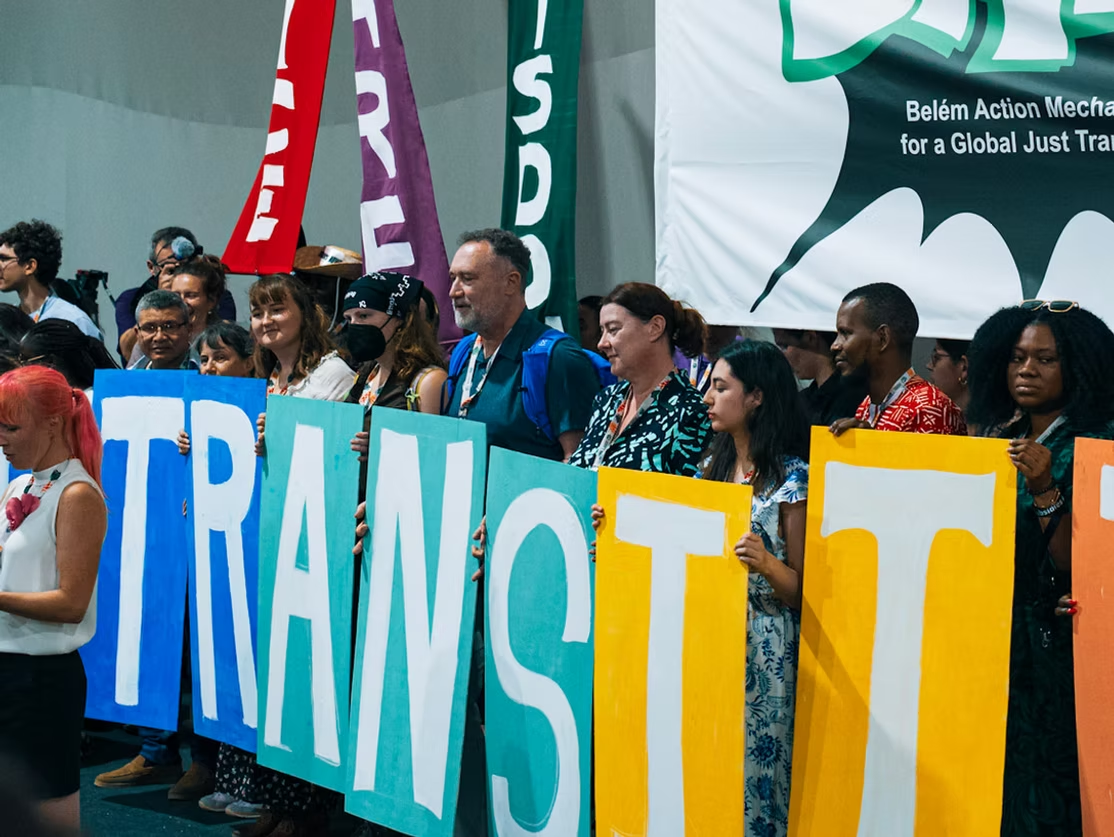
In the face of these obstacles, a growing global movement secured critical outcomes on the Just Transition Work Programme, including a coordination mechanism that puts human rights and people's lives at the center of a global transition off fossil fuels. The Just Transition outcome also includes ambitious language on protecting frontline communities and scaling up grant-based finance for developing countries.
Sadly, on a number of other critical negotiating tracks, COP30 fell short of global demands for climate justice:
🌀 Global Goal on Adaptation
🔥 Fossil Fuels
⛏️ Critical Minerals
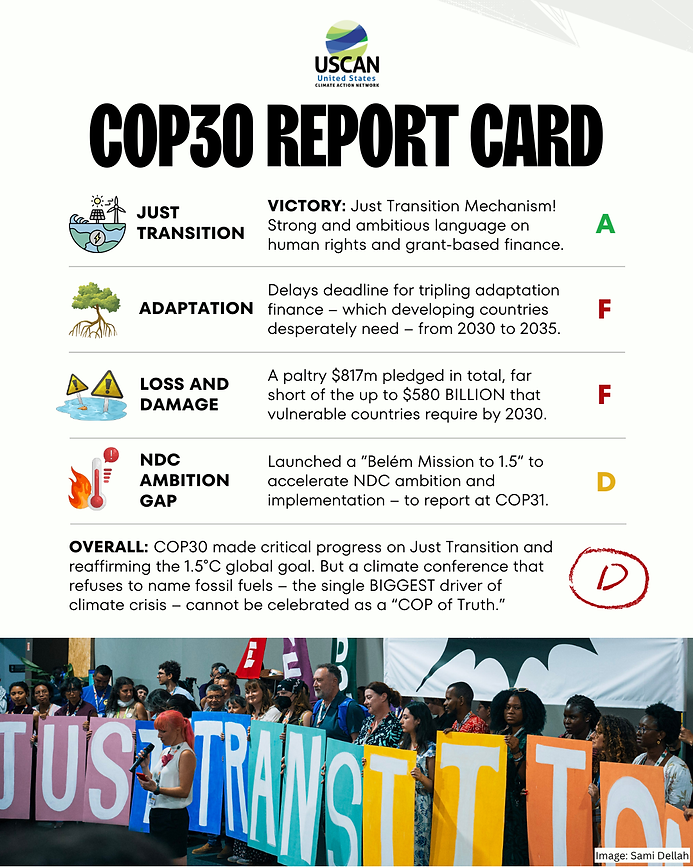
Further, amidst global threats and falling trust in multilateral spaces, the COP30 process failed to meaningfully include some of the communities most impacted by these policies. It is in response to three decades of failed COPs that local indigenous activists escalated actions in Brazil, and a growing movement is urging the UN climate framework to recognize Afro-descendants as a unique constituency. While they were met with pushback and even militarized repression, 1600 fossil fuel lobbyists flooded the talks, peddling policies that put profits over people's lives.
This perverse injustice underscores why it is so critical to reform the UNFCCC process to center the perspectives of most-impacted communities, rather than the very corporations and industries who have fueled the crisis.
Despite COP30 having only delivered partially on what the world needs: we will continue the fight at home to enact a just transition for our communities, and demand that our elected officials, from all levels of government, bend the arc of climate leadership towards equity and justice.
📣 See what U.S. Climate Action Network members had to say.
🎧 Listen to Brandon Wu, Director of Policy and Campaigns at ActionAid USA and USCAN Board Member, share his reactions to COP30 on Democracy Now. (Starts around the :43 mark)
🔎 Want to dive deeper into the policy? Check out Carbon Brief’s analysis of all the COP30 outcomes.




.avif)