Updated: Jun 21
Just Transition is the buzzword in the halls of Bonn these days – but what does it actually mean?
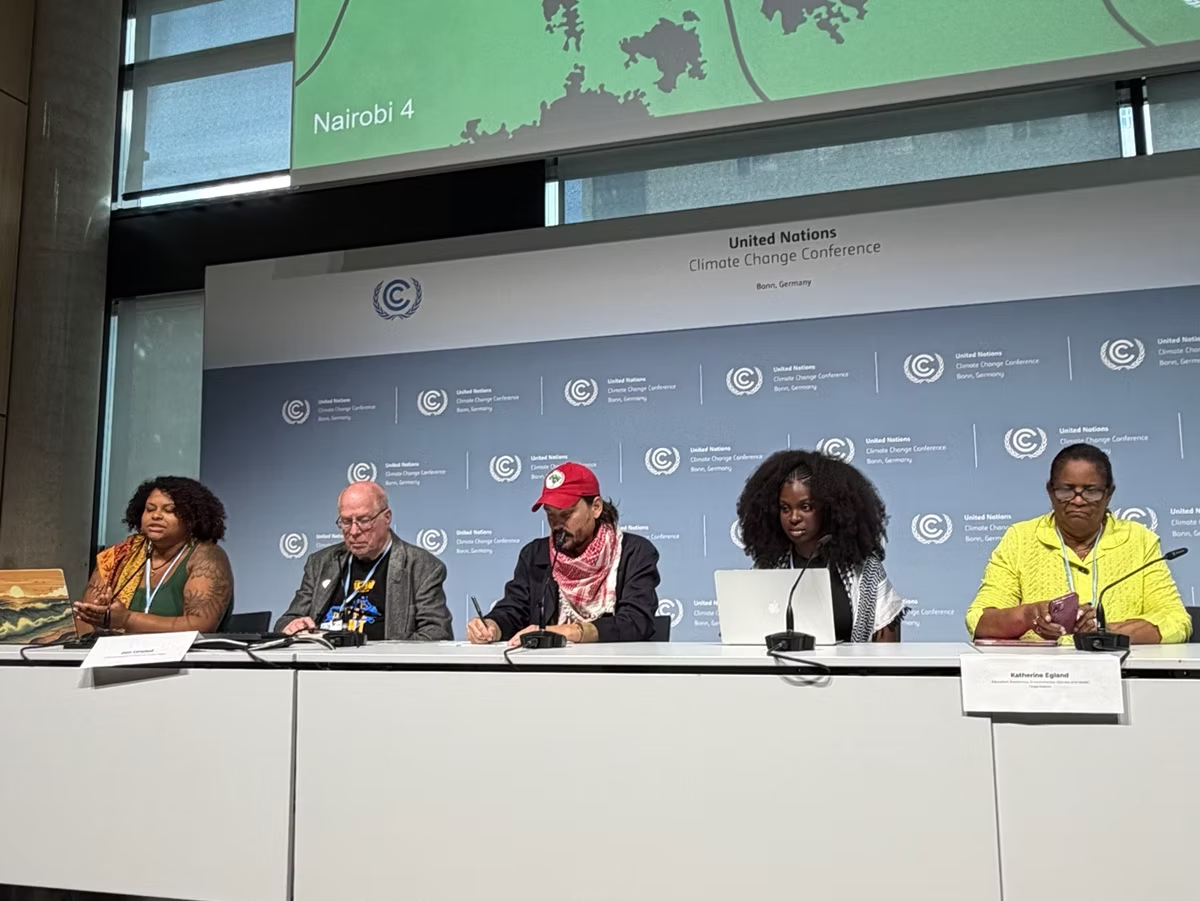
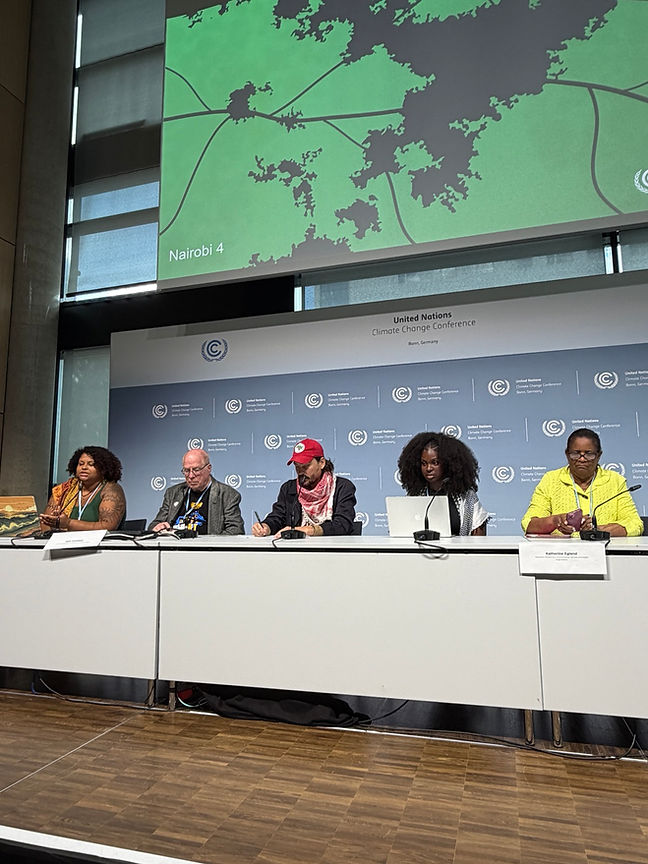
At a June 11, 2026, press conference co-organized by the U.S. Climate Action Network (USCAN) and Just Transition Alliance (JTA), labor organizers, climate justice advocates, farmers, and community leaders painted a vision of climate transformation rooted not only in cutting emissions, but also in repairing historical harms and redistributing power. (Watch the full recording of the press conference here.)
Moderator Analyah Schlaeger dos Santos–of Minnesota Interfaith Power & Light and co-chair of USCAN’s International Policy Action Team–opened by connecting local struggles to a growing global movement. She pointed to grassroots organizing in her city of Minneapolis, and the momentum generated in Santa Marta, Colombia, where governments and civil society leaders gathered in April 2026 to discuss a shared commitment to transition off fossil fuels.
For labor leader Dave Campbell of United Steelworkers Local 675 and a Just Transition Alliance board member, a just transition begins with accountability.
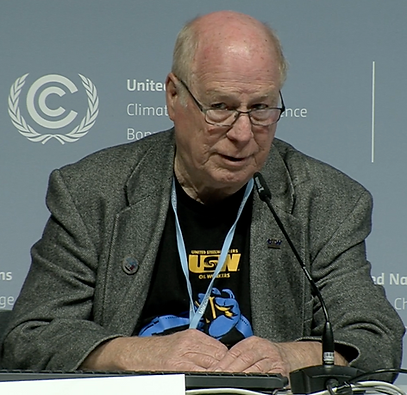
Drawing on his union's history in the oil, chemical, and atomic industries, Campbell spoke candidly about the legacy of pollution that harmed workers and communities alike. The people who generated enormous wealth from fossil fuels, he argued, have largely escaped responsibility for the damage left behind.
"The costs have been socialized, but the profits have been privatized," Campbell said. He also condemned the U.S. retreat from international climate engagement, while emphasizing that “it’s up to us as Americans to do our share in the belly of the beast and push our government to be responsive.”
"The costs have been socialized, but the profits have been privatized." – Dave Campbell, United Steelworkers Local 675
That call for accountability echoed throughout the press conference.
Katherine Egland of the Education, Economics, Environmental, Climate and Health Organization (EEECHO), based in Gulfport, Mississippi, warned that the language of a "just transition" is increasingly being adopted without the commitments that make it meaningful.
She pointed to renewed investments in oil and gas drilling and pipeline construction as evidence that many governments and corporations remain committed to extractive models that sacrifice vulnerable communities. She also challenged the growing promotion of technologies like geoengineering, arguing that many so-called climate solutions merely reproduce existing patterns of pollution, extraction, and environmental racism under a different name.
Yet speakers also emphasized that alternatives already exist.
For Jesús Vázquez of Organización Boricuá de Agricultura Ecológica and La Vía Campesina, a just transition is something communities are already building every day through agroecology and food sovereignty.
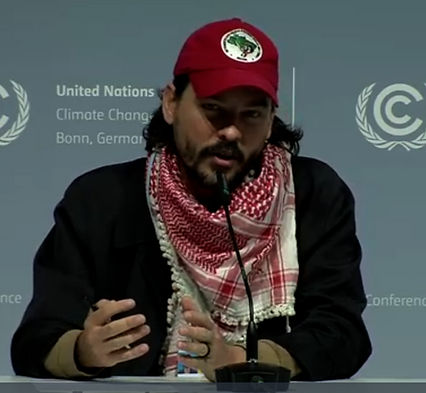
Agroecology, he explained, is more than a farming practice. It is a social movement that creates resilient food networks rooted in local knowledge and collective care. At a time when multinational corporations wield enormous influence over global food systems, Vázquez argued that decisions about food and agriculture must remain in the hands of the people who produce and depend on it.
Solutions are already being practiced every day: 70-80% of the food produced in the world is produced by small-scale farmers.
"Globalize the struggle, and globalize hope," Vázquez urged.
Finally, Cheryl Kwapong of The Chisholm Legacy Project reminded us that climate justice cannot be separated from racial justice.
“A Just Transition means that our Black communities participate with real, not symbolic, power.”
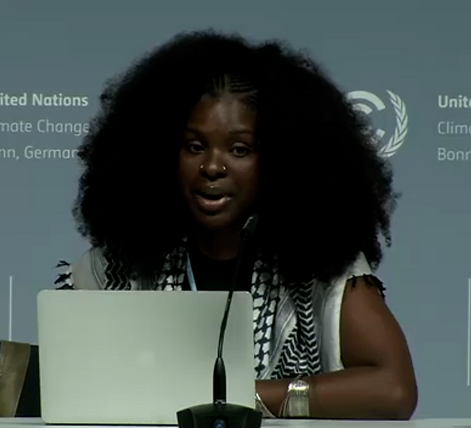
She called for debt cancellation as well as meaningful financial support for climate-vulnerable nations from historical emitters.
Taken together, the speakers offered a powerful reminder that the transition away from fossil fuels is not simply a technological challenge. It is a political, economic, and moral one.
A Just Transition is about building a different future altogether. We remain unbowed, unbent, and unbroken toward co-creating a just transition with our shared power!
Unbowed, unbent, and unbroken.
This blog post was published with vital input from Sriram Madhusoodanan, USCAN Director of Policy and Advocacy, and Catalina de Onís from the Just Transition Alliance. Thank you both!





.jpeg)